
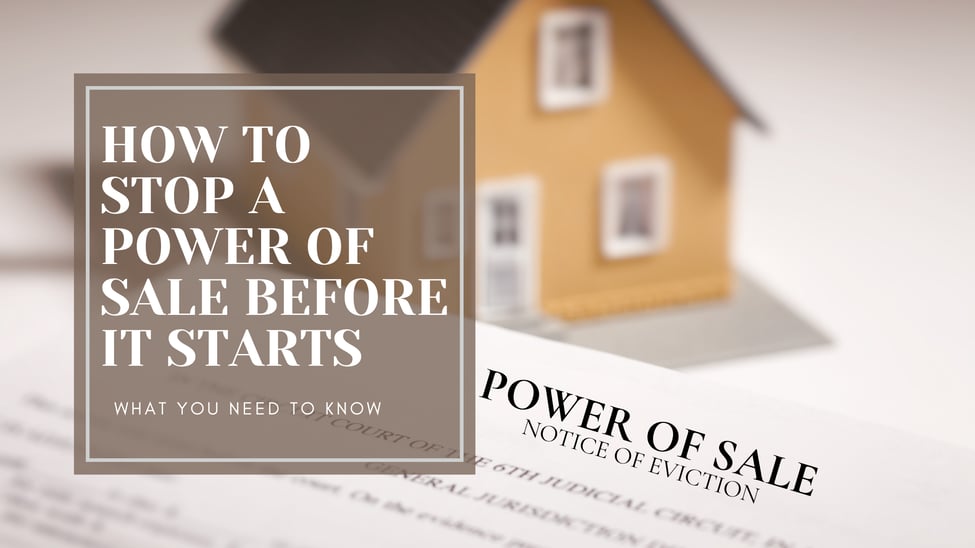
Power of sale in Ontario has been coming up more often lately, and there's a lot of misinformation attached to it. Most of that confusion comes from American shows and social media, where the word "foreclosure" gets used for something that barely happens here. If you're a homeowner worried about falling behind, or a buyer wondering whether a power of sale listing is actually a good deal, understanding how this process really works in Ontario changes everything. Here's what a power of sale actually is, how to prevent one, and what to know before buying one.
Power of Sale vs Foreclosure, What's the Real Difference?
People use "foreclosure" and "power of sale" like they mean the same thing. They don't, and the difference matters. A foreclosure is a US term. It's when a lender takes over a property and becomes the owner. That almost never happens in Ontario. Here, when a homeowner falls too far behind, the bank exercises what's called power of sale. The bank sells the home, but the original owner still technically owns it until that sale closes. If the house sells for more than what's owed, the difference goes back to the homeowner. So if a bank sells a home for $800,000 and the owner only owed $500,000, that owner walks away with $300,000. That single fact, that the homeowner can still come out ahead, is the part almost nobody explains, and it's the reason understanding your options early matters so much.
Prevention Starts the Day You Buy
The best time to protect yourself from ever facing a power of sale is before you even buy. That starts with not maxing out at your mortgage approval. A payment can look fine on paper and still feel uncomfortable once you're living with it every month, especially once you add property taxes, utilities, and the ongoing cost of maintaining a house. There's always something that needs doing, a roof, a furnace, an appliance, and you need money set aside for it. It also means talking to more than one person before you buy. Shop around the way you would for a car. Talk to people who are already successful, unstressed homeowners, not just someone who recently got a license. A good mortgage broker or realtor with real experience will give you the same honest advice, even when it's not what you want to hear.
When Life Happens, Timing Is Everything
Job loss. Reduced hours. Divorce. A health issue that takes you out of work. None of these are things anyone plans for, and any one of them can put a mortgage at risk. The biggest mistake homeowners make is waiting until they've already missed a payment before reaching out for help. By then, the number of available options has already started shrinking. The advice from mortgage professionals is consistent: start the conversation early, ideally a year before you expect trouble, and definitely the moment you sense it coming. Lenders don't want to own your house. They want a mortgage that keeps getting paid. That means they're often willing to work with you, through an extended amortization, a refinance, a debt consolidation, or even deferred payments while your home sells. None of that is available once you've gone quiet. If you have a mortgage with a bank, call your banker. If your mortgage is insured through CMHC, Sagen, or Canada Guaranty, those insurers also have programs to help. A lawyer can look at the process too, and sometimes buy you more time.
What Buyers Need to Know Before Purchasing a Power of Sale
A power of sale listing can look like a steal, but it's not automatically a deal. The bank is legally required to try for market value, and they won't sell it for whatever's still owed just to close the file faster. That means due diligence matters more here, not less. The bank has never lived in the home and makes no representations about its condition, so a home inspection is essential. Appliances like the fridge, stove, washer, and dryer legally belong to the original owner, and they can come back to remove them any time before closing, even if you assumed they were included. There's also the matter of redemption. Right up until closing, the original owner can pay off what's owed and reclaim the home, which means your deal can fall apart at the last minute, even after a signed agreement. Closings on power of sale properties also tend to move fast, often around 30 days, so financing needs to be lined up in advance. And watch the HST clause closely. On a normal resale, HST is included in the price. On a power of sale, it typically isn't, and that single clause has caused more than one buyer to walk away from a deal they actually wanted.
Power of sale is a lagging indicator. By the time a home actually reaches this point, the financial trouble behind it usually started a year or more earlier. That's exactly why timing matters so much, whether you're the homeowner trying to protect what you've built, or the buyer trying to make a smart decision on a listing that looks too good to pass up. If you're facing a power of sale, worried about your mortgage, or curious about buying one, reach out. We'd rather have that conversation with you early than watch you figure it out alone.
Want more Info?
Check out the Podcast Episode on Real Estate Without The Noise: https://real-estate-without-the-noise-b92a7032.simplecast.com/episodes/how-to-stop-a-power-of-sale-before-it-starts