You've decided it's time for a smaller home.
The kids have moved out. The house has more rooms than you use. And you're not looking forward to one more winter of shovelling the driveway.
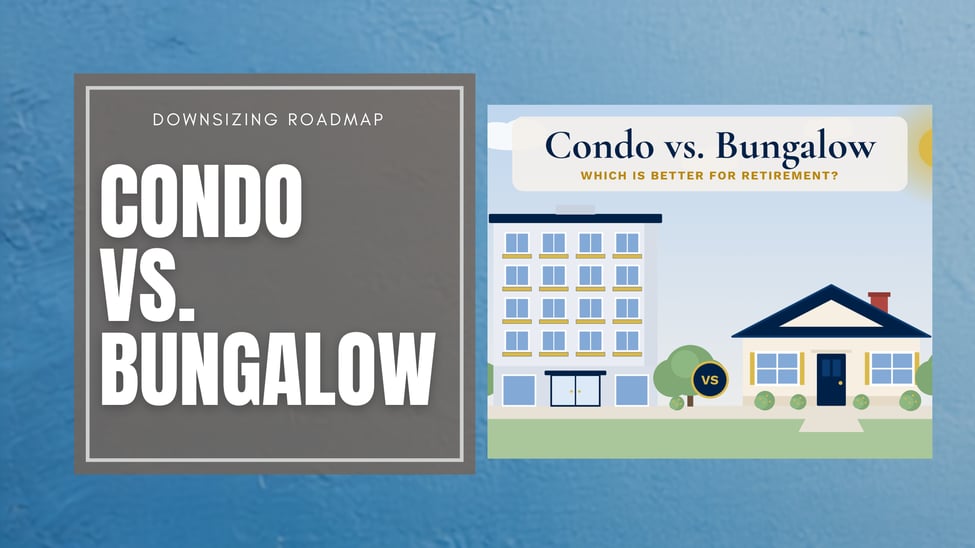
So now you're asking the question that comes next. Condo or bungalow?
If you're working through a condo vs bungalow retirement decision, here's what more than 35 years of helping homeowners in Caledon, Bolton, Brampton and the northwest GTA has taught me. The home that makes retirement easier today isn't always the home that works best ten years from now.
Condo vs Bungalow for Retirement: What Are You Really Choosing?
Most people think this is a choice between less work and no condo fees. It's really a choice about how you want to live, how much control you want, and how much financial flexibility you want to keep.
A condo gives you shared maintenance. Someone else clears the snow and cuts the grass. You still look after the inside of your unit, and you share financial decisions with the other owners.
A freehold bungalow gives you your own front door, a garden, and privacy. You also arrange and pay for the roof, the driveway, the snow, and every repair.
Neither one is wrong. They're different trade-offs, and the right one depends on which trade-offs you can live with.
The Cost Comparison Most People Skip
Here's where people get tripped up.
They compare a $600 monthly condo fee with a bungalow that has no condo fee. The bungalow looks like the winner.
But $600 a month is $7,200 a year. That fee typically pays for shared costs like building maintenance, snow removal and a contribution to the reserve fund, which is money set aside for major repairs to common areas. What's included varies from building to building.
A bungalow has real costs too. Picture $2,500 a year for lawn and snow help, plus $4,000 set aside for future repairs. That's $6,500 a year, before property tax, insurance or utilities. These numbers are examples only. Your own will be different.
The better comparison is the total annual cost of owning each home, today and in five or ten years.
Condo fees can rise as a building ages. Owners can also face a special assessment, which is an extra charge toward certain condominium expenses. When you're buying a resale condo in Ontario, have your lawyer review the status certificate, the budget, the reserve fund information and the rules.
One more thing. A lower condo fee isn't automatically better. Sometimes it just means fewer services, or less being set aside for future repairs.
Is a Bungalow Really Easier to Age In?
Many people look at bungalows to avoid stairs. That makes sense.
But one level doesn't always mean easy. When you tour a bungalow, check the front steps, the garage entry, the width of the doorways and hallways, and the bathroom. Is there a walk-in shower? And where's the laundry? I've seen plenty of bungalows with the bedrooms on the main floor and the washer and dryer in the basement. If you bought it to avoid stairs, that defeats the purpose.
Condos need the same scrutiny. What happens if the elevator is out of service? How far is the walk from your parking spot to your front door? Are there heavy doors or high thresholds?
A home can be all on one level and still be hard to live in. So picture how you'd use it if your needs changed. You're not expecting trouble. You're giving yourself options.
Location Can Matter More Than Home Type
Picture a lovely bungalow on a quiet street. Now picture yourself ten years from now, deciding you'd rather not drive at night.
Can you still get groceries? Reach your doctor? See friends? Keep doing what you enjoy?
The right home in the wrong location can still be the wrong decision. A walkable condo may suit you better. Or a bungalow close to shops and services may be the answer. Compare the lives you'd be living, not just the two properties.
A Third Option Worth a Look
There's also the bungalow-style condominium. It can offer ground-level living, a private entrance and some outdoor space, while certain maintenance is handled together. Each one is set up differently, so find out exactly what the corporation looks after, what you're responsible for, and what the fees cover.
Seven Questions to Ask Before You Buy
Whichever home you're considering, these seven questions help you look past the finishes and the floor plan.
- Can I comfortably afford the full cost of living in this home, not just the purchase price?
- Could I manage everyday life here if stairs became difficult?
- What would happen if I stopped driving?
- Would I still enjoy this home if I spent more time in it?
- How much independence and control do I want?
- What major expenses could be coming in the next five to ten years?
- Could this home adapt if my needs changed?
Your Next Step
FREE RESOURRCES
You don't need to decide today. A good first step is to compare two real properties side by side, with their full annual costs and an accessibility check.
CLICK HERE_ FREE GUIDE_CONDO VS. BUNGALOW
Thinking about downsizing? Here's a little something to help you if you'd like help getting started, my free Downsizing Guide walks you through the early decisions:
CLICK HERE_ DOWNSIZING GUIDE
And if you're thinking about a move in Caledon, Orangeville, Erin, Brampton or nearby, call me at 905-965-5902, email [email protected], or book a time to talk:
CLICK HERE_ BOOK A CALL
You don't need to have it all figured out before we do.
CHECK OUT THE PODCAST VERSION CLICK HERE
EP226